


About Game & Watch Gallery Advance
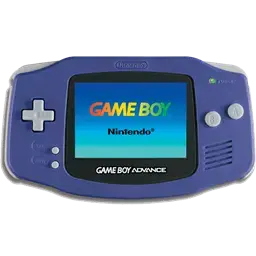
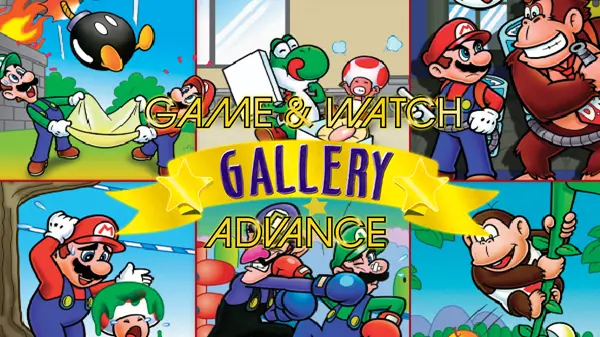
Game & Watch Gallery Advance is a compilation of classic Game & Watch titles released for the Game Boy Advance in 2002 by Nintendo. It collects several early handheld LCD-style games and reworks them for modern handheld play, combining the original minimalist arcade concepts with updated “modern” versions featuring Mario and friends. The result is a mix of extremely simple gameplay ideas presented in both retro and enhanced formats.
The collection includes short arcade-style challenges built around very basic mechanics such as catching objects, avoiding hazards, and managing timing-based movement. Each game is designed around a single core idea, originally created for early handheld devices where every action had to be immediate and easy to understand. The GBA version preserves that simplicity while improving visuals, animations, and feedback so the action feels clearer and more responsive.
What makes this entry slightly different from earlier Gallery releases is how it leans more into handheld pacing. Sessions are extremely short, and most games are designed to be replayed repeatedly to improve timing and score rather than progressing through long stages. The “modern” versions also add more expressive character animations, replacing abstract LCD icons with Mario-themed visuals that make each action easier to read.
On Emulator Games Zone, it can be played through a GBA Emulator directly in-browser, keeping the original pick-up-and-play structure intact without requiring setup.
How To Play
Game & Watch Gallery Advance is built around a set of individual mini-games, each with its own simple control scheme and objective. Most games use only a few inputs—typically moving left or right, or triggering a single action like catching, jumping, or dodging.
Each mini-game follows a pattern of increasing difficulty. Early moments are slow and predictable, allowing players to understand timing and positioning. As the game continues, speed gradually increases, and mistakes become harder to recover from, especially in tight reaction-based challenges where one missed input can end the run.
The “modern” versions included in the game keep the same rules but replace the original LCD visuals with animated Mario characters and clearer environments. This doesn’t change how the games play, but it makes it easier to track movement and timing during faster sequences.
Progress is measured purely through score and survival time. There are no long levels or story progression systems—each run is a short attempt to improve reaction speed and consistency. The design encourages repeated play, where learning timing patterns is more important than memorizing complex mechanics.