




About Mario Party 3
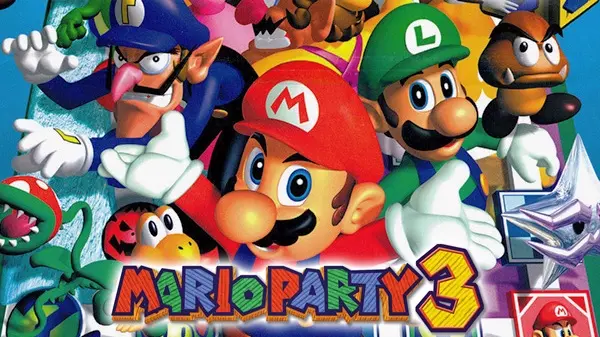
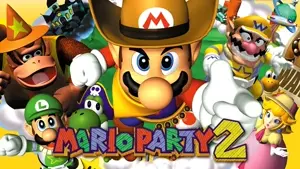
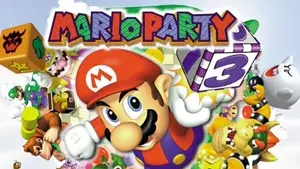
Mario Party 3 is a party board game developed by Hudson Soft and published by Nintendo for the Nintendo 64 in 2000. It continues the chaotic board-style gameplay of the series, where Mario, Luigi, Peach, Yoshi, Wario, and other characters compete across themed boards by rolling dice, collecting coins, and fighting for stars through a mix of strategy and luck. Each match quickly shifts between planning movement on the board and reacting to sudden events or mini-games.
Compared to earlier entries, Mario Party 3 adds more structured board mechanics and deeper item usage, giving players more control over how they influence turns. Boards feel more interactive, with events that can change routes, affect star locations, or trigger unexpected shifts in momentum. The game also expands competitive depth by introducing additional systems around dueling and item-based encounters, making player interactions more direct and unpredictable.
The Nintendo 64 release is the core version of the game, designed for both solo sessions and multiplayer party play. On Emulator Games Zone, it can be played directly through an N64 Emulator, allowing full board matches and mini-game sessions to run smoothly in-browser without additional setup.
How To Play
Mario Party 3 is played on a digital board where each player rolls a dice block to move across different paths. The main goal is to collect stars by reaching them on the board, but the path is constantly shaped by random events, opponent actions, and mini-games that break up each round.
After every turn cycle, mini-games begin and determine how players gain coins. These mini-games vary in structure—some are free-for-all competitions, others are team-based, and some pit one player against the rest. Winning them is essential, since coins are required to purchase stars when they appear on the board.
A key addition in this entry is the expanded item system. Players can store and use items that modify dice rolls, interfere with opponents, or change movement outcomes. Some items are designed for direct interaction, such as dueling another player or forcing risky decisions at critical board positions.
Board layouts also play a larger role than in earlier games. Certain paths can be blocked, redirected, or altered depending on events triggered during play. This makes positioning more important, as choosing a route is not just about distance, but also about avoiding traps and controlling access to star locations.
Because of these layered systems, matches often shift quickly in momentum. A player in the lead can lose advantage through a single mini-game or item interaction, while someone behind can recover with well-timed decisions and favorable board events.