





About Mario’s Picross
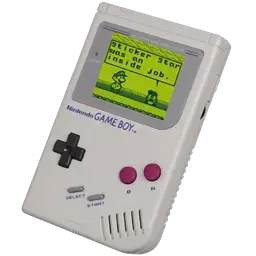
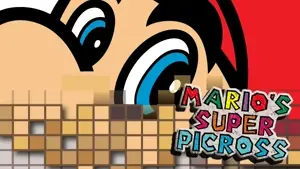
Mario’s Picross is a logic puzzle game developed by Jupiter Corporation and published by Nintendo for the Game Boy in 1995. Rather than focusing on platforming or action, it introduces players to the world of nonogram puzzles, where every completed grid gradually reveals a hidden picture. Featuring Mario as a stone mason, the game blends familiar Nintendo charm with thoughtful puzzle-solving that rewards patience and careful observation.
The adventure is built around hundreds of handcrafted puzzles of varying sizes and difficulty. Each stage begins as a blank stone tablet marked with numbers along its rows and columns. Those numbers act as clues, helping you determine which blocks should be carved away and which should remain. Solving each puzzle correctly uncovers an image ranging from everyday objects to familiar Nintendo-inspired designs.
Unlike many Game Boy puzzle games that emphasize speed, Mario’s Picross encourages players to slow down and think through every move. Larger puzzles become increasingly intricate, often requiring players to combine multiple clues before making progress. This steady learning curve makes the game approachable for newcomers while remaining satisfying for experienced puzzle fans.
You can enjoy Mario’s Picross on Emulator Games Zone using our Game Boy Emulator, making it easy to solve these classic nonogram puzzles directly in your browser.
How To Play
Each puzzle is presented as a grid with numbers displayed beside every row and column. These numbers tell you how many consecutive squares should remain filled. Your task is to interpret the clues correctly and decide which blocks to chip away using Mario's hammer.
As you uncover more of the grid, the solution gradually takes shape as a hidden picture. Marking incorrect blocks wastes valuable time, and repeated mistakes trigger time penalties, so careful deduction is often more effective than guessing.
The game begins with smaller, straightforward puzzles that introduce the basic rules before expanding into much larger and more challenging grids. Later puzzles require combining information from multiple rows and columns at once, making logical reasoning the key to success.
The Game Boy version also includes a training mode that explains the mechanics step by step, making it easy for new players to learn nonogram strategies. With hundreds of puzzles to complete, each solved image provides a satisfying reward and encourages you to tackle the next challenge.