









About The Legend of Zelda: Oracle of Seasons
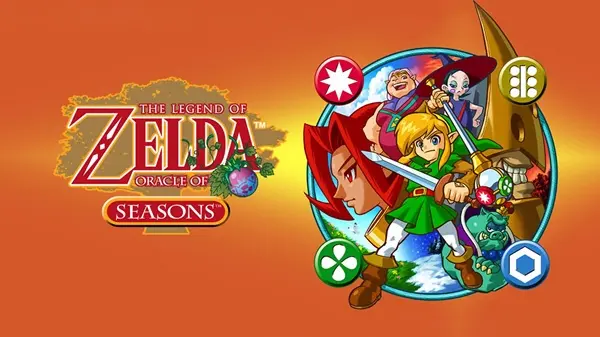
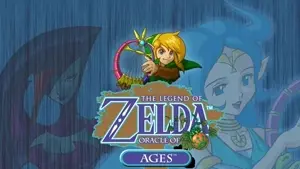
The Legend of Zelda: Oracle of Seasons is an action-adventure game released for the Game Boy Color in 2001. Developed by Capcom with supervision from Nintendo, it launched alongside Oracle of Ages as part of a connected two-game Zelda experience.
The story takes place in the land of Holodrum after Link is transported there by the Triforce. Soon after arriving, the dancer Din — who is secretly the Oracle of Seasons — is kidnapped by the armored general Onox. With the balance of nature collapsing, the seasons across Holodrum fall into chaos, changing the environment and affecting how the world can be explored.
Unlike Oracle of Ages, which focuses heavily on puzzles and time travel, Oracle of Seasons places greater emphasis on combat, movement, and action-oriented dungeon design. The game moves at a faster pace and regularly pushes players into battles against large enemy groups, miniboss encounters, and aggressive dungeon traps.
The central mechanic revolves around the Rod of Seasons, an item that allows Link to change the current season in specific areas. Winter can freeze lakes, spring makes flowers bloom, summer causes vines to grow, and autumn changes terrain layouts. Entire routes and hidden secrets depend on switching seasons at the right locations.
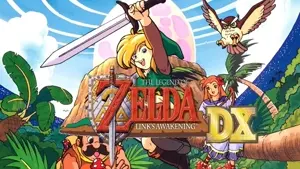
Visually, the game expands on the colorful style of Link’s Awakening DX with larger overworld regions, more animated environments, and varied seasonal themes that constantly change the appearance of Holodrum. Each season gives familiar locations a completely different atmosphere.
Many players still remember Oracle of Seasons for its strong dungeon design, satisfying combat, and creative environmental mechanics that made exploration feel constantly fresh on the Game Boy Color.
How To Play
In Oracle of Seasons, players guide Link across Holodrum while using the power of the seasons to unlock new paths, solve environmental puzzles, and progress through dungeons.
The Rod of Seasons is the game’s defining mechanic. By changing between winter, spring, summer, and autumn, players can reshape areas of the overworld. Snow can create walkable paths, flowers can launch Link onto cliffs, vines can open vertical routes, and fallen leaves can reveal hidden entrances.
Combat plays a larger role here compared to Oracle of Ages. Enemies attack more aggressively, and many dungeons focus on timing, movement, and weapon usage instead of complex puzzle chains. Players use swords, bombs, shields, boomerangs, and other classic Zelda items throughout the adventure.
Dungeon progression is tightly connected to seasonal changes. Some areas can only be entered during specific seasons, while others completely transform depending on the environment. Players often need to revisit locations multiple times using different seasonal conditions to uncover secrets or continue the story.
Animal companions also return, allowing Link to travel with Ricky the kangaroo, Dimitri the dodongo, or Moosh the flying bear depending on player choices. Each companion changes movement options and provides access to unique parts of Holodrum.
Like Oracle of Ages, the game supports a password linking system that connects both adventures together. Completing one game unlocks expanded story content, stronger equipment, special character interactions, and the true final battle when linked with the opposite version.