



About The Legend of Zelda: Majora’s Mask
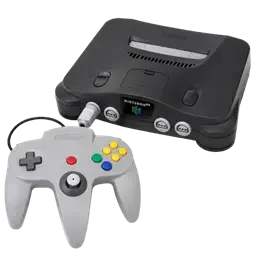
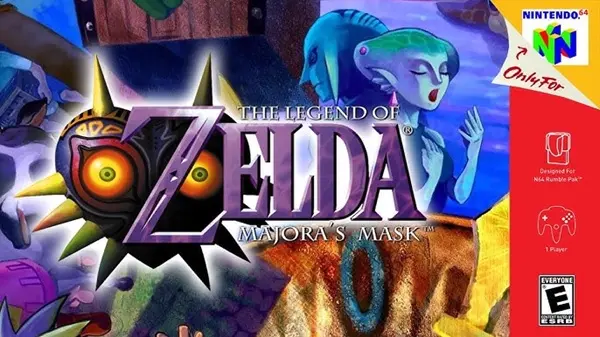
The Legend of Zelda: Majora’s Mask is an action-adventure game developed by Nintendo and released for the Nintendo 64 in 2000. Built using the same engine as Ocarina of Time, the game takes the Zelda series in a much darker and stranger direction, focusing heavily on time, loss, routine, and the lives of the people inside its world.
The story begins shortly after the events of Ocarina of Time when Link enters the mysterious land of Termina after being ambushed by the Skull Kid, who wears the powerful Majora’s Mask. Soon after arriving, Link discovers that the moon is falling toward the world and will destroy Termina in only three days.
Unlike most Zelda games, Majora’s Mask is built around a constantly repeating three-day cycle. Time continues moving forward even while players explore towns, complete quests, or enter dungeons. NPCs follow schedules, events happen at specific hours, and entire side stories can change depending on the day or time.
One of the game’s most memorable mechanics is its mask system. Throughout the adventure, Link collects masks that grant new abilities or completely transform him into different forms. Deku Link, Goron Link, and Zora Link all control differently and allow access to areas, puzzles, and combat styles unavailable in Link’s normal form.
Compared to Ocarina of Time, the world is smaller but far denser. Side quests are more personal, NPC stories feel more emotional, and many optional events reveal how characters react to the approaching disaster. The atmosphere constantly shifts between strange humor, sadness, tension, and mystery.
Even years later, Majora’s Mask remains one of the most unique Zelda games because of its time-loop structure, unsettling tone, and heavy focus on character-driven storytelling instead of traditional heroic adventure alone.
How To Play
In Majora’s Mask, players explore the world of Termina while trying to stop the moon from crashing into the land before the three-day cycle ends. Time constantly moves forward, and players must manage quests, dungeon progression, and exploration carefully before resetting the cycle when necessary.
Combat combines sword attacks, shields, ranged weapons, and magical items similar to Ocarina of Time, but the transformation masks dramatically change gameplay. Deku Link can bounce across water and use flowers to glide, Goron Link rolls at high speed and uses heavy attacks, while Zora Link swims underwater and attacks with boomerang-like fins.
The game’s schedule system affects nearly every part of progression. Shops open and close at certain hours, characters move to different locations throughout the day, and side quests often require players to appear at very specific times. Keeping track of routines becomes a major part of the experience.
The ocarina also plays an important role by allowing players to slow time, skip ahead to specific hours, or reset the three-day cycle entirely. Learning how to manage time efficiently becomes just as important as combat or exploration.
Dungeons are heavily tied to the transformation mechanics and often focus on environmental puzzles, rotating structures, water flow, or movement-based challenges. Compared to earlier Zelda games, Majora’s Mask places much greater emphasis on side quests, NPC interactions, and mastering the repeating timeline rather than simply progressing through a linear adventure.