




About The Legend of Zelda
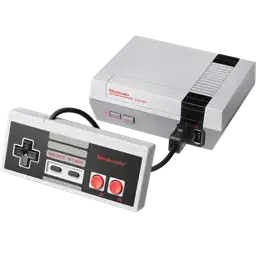
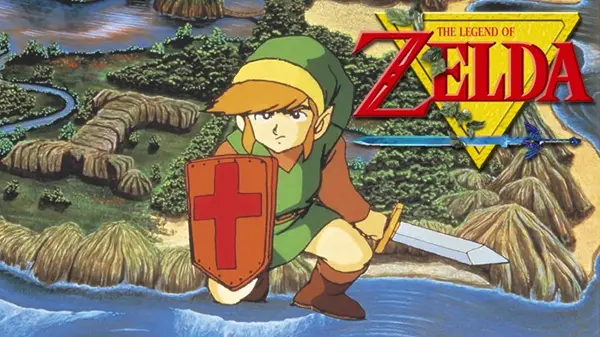
The Legend of Zelda is an action-adventure game developed by Nintendo and originally released for the Famicom Disk System in 1986 before later arriving on the Nintendo Entertainment System. It introduced players to the kingdom of Hyrule, the hero Link, and the fantasy adventure formula that would later become one of Nintendo’s most important series.
The story begins after Princess Zelda splits the Triforce of Wisdom into fragments to keep it away from the villain Ganon. Link sets out across Hyrule to recover the missing pieces, defeat monsters, and rescue Zelda before Ganon takes control of the kingdom.
What made The Legend of Zelda feel different from many games of its era was its open structure. Instead of forcing players through a strict path, the game encourages exploration almost immediately. Hidden caves, secret passages, optional upgrades, and dangerous areas are scattered across the overworld with very little direct guidance. Players were expected to experiment, get lost, and slowly learn the world through exploration.
The game combines top-down sword combat with dungeon crawling and puzzle-solving. Each dungeon introduces new enemies, maze-like layouts, hidden walls, and special items that gradually open more of the world. Bombs, boomerangs, candles, and magical tools all become important for both combat and exploration.
Even decades later, the original Zelda still feels unique because of how much freedom it gives players. The sense of wandering through an unknown world without constant instructions became one of the game’s defining qualities and helped shape countless adventure games that followed.
How To Play
In The Legend of Zelda, players control Link from a top-down perspective while exploring Hyrule, fighting monsters, collecting items, and searching for the scattered pieces of the Triforce.
Combat revolves around sword attacks combined with secondary weapons like bombs, arrows, boomerangs, and magical rods. Different enemies require different strategies, especially inside later dungeons where stronger monsters appear in tighter spaces.
The game’s overworld is largely open from the beginning. Players can freely travel between forests, mountains, lakes, graveyards, and hidden caves while searching for secrets or discovering dungeon entrances. Many important upgrades are hidden behind destructible walls, burned trees, or unmarked locations, making exploration a major part of the experience.
Dungeons play very differently from the overworld. Each dungeon contains maze-like rooms, locked doors, traps, puzzles, and boss fights. Completing dungeons rewards players with heart containers and special equipment that improve survival and unlock new exploration options.
Compared to later Zelda games, the original release gives very little direct guidance. Players often need to memorize locations, test suspicious walls with bombs, and revisit earlier areas after obtaining new items. That sense of discovery and experimentation is one of the game’s most memorable features.