







About Teenage Mutant Ninja Turtles III: Radical Rescue
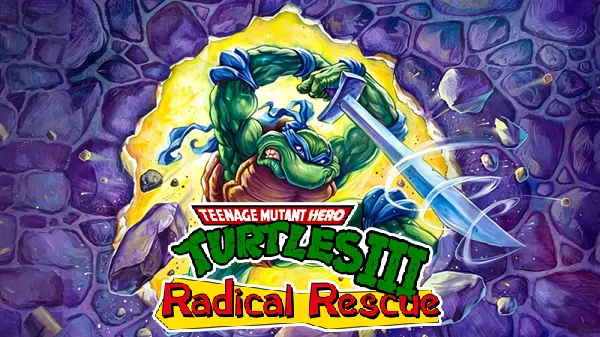
Teenage Mutant Ninja Turtles III: Radical Rescue is a side-scrolling action-adventure game developed and published by Konami in 1993 for the Game Boy. Unlike the earlier handheld TMNT titles that focused mainly on straightforward action, this entry takes a different approach by adding exploration and progression-based level design. The story begins when the Turtles discover that Shredder has captured their allies, including Splinter and April O’Neil, forcing them to venture deep into enemy territory to bring everyone back.
Leonardo, Michelangelo, Donatello, and Raphael are all present, but the game starts with only Michelangelo available. As the rescue mission unfolds, the other turtles must be found and unlocked one by one, changing how the adventure develops as you progress. Each rescued character brings new abilities that open previously inaccessible areas, giving the game a more interconnected structure than earlier Game Boy entries.
Originally released exclusively for the Game Boy, Radical Rescue stands out in the TMNT handheld lineup for its Metroid-style design, which was unusual for the series at the time. Instead of moving through linear stages, players gradually explore connected zones, backtrack to new paths, and unlock movement abilities that reshape how earlier areas can be approached.
On Emulator Games Zone, players can experience this Game Boy classic directly through a browser using the Game Boy emulator, revisiting one of the most experimental Ninja Turtles games ever made for handheld systems.
How To Play
Radical Rescue plays very differently from the previous Game Boy TMNT games. Instead of jumping from one linear stage to another, you explore a large interconnected map filled with locked paths, hidden routes, and enemy-controlled zones. Progress depends less on speed and more on discovering where to go next and which abilities you have unlocked.
At the start, you only control Michelangelo, who can handle basic movement and combat. As you rescue the other turtles, each character becomes playable and brings unique abilities that change how you move through the world. For example, certain turtles can break through obstacles or reach higher platforms, allowing access to areas that were previously blocked.
Combat remains side-scrolling and straightforward, with enemies appearing in small groups across exploration zones. However, the focus is less on constant fighting and more on surviving encounters while navigating unfamiliar areas. Health pickups and careful movement matter more here than in earlier TMNT titles.
One of the key differences in Radical Rescue is its ability-driven progression. Instead of simply clearing levels, you often find yourself returning to earlier locations after gaining a new turtle or skill, unlocking shortcuts and hidden paths that were not accessible before. This structure gives the game a slower, more deliberate rhythm compared to the action-heavy style of other entries.
Boss encounters are scattered throughout the map and usually act as checkpoints that test whether you have explored enough to survive. They are less about rapid attacks and more about timing, positioning, and making use of the abilities you’ve unlocked so far.
Overall, Radical Rescue feels closer to a compact Metroid-style adventure than a traditional TMNT action game, making it one of the most unique entries in the entire series.