















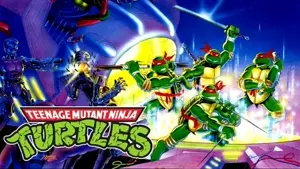
About Teenage Mutant Ninja Turtles IV: Turtles in Time
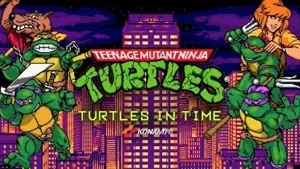
Teenage Mutant Ninja Turtles IV: Turtles in Time is a side-scrolling beat ’em up developed and published by Konami in 1992 for the Super Nintendo Entertainment System. It is widely regarded as one of the strongest entries in the TMNT game lineup and a refined home console adaptation of the earlier arcade hit Turtles in Time. The story begins in New York City when Shredder launches a sudden attack and drags the turtles into a chaotic time-traveling conflict that stretches far beyond their usual streets and sewers.
Leonardo, Michelangelo, Donatello, and Raphael are all fully playable, and the game is built around fast, responsive combat designed for both solo and cooperative play. Across different stages, players are thrown into unexpected time periods, including prehistoric landscapes, pirate ships, industrial future zones, and familiar city streets twisted by Shredder’s interference. Each setting feels distinct, not just visually but also in how enemies and stage layouts are designed.
Originally released for the SNES, this version is not a direct arcade port. Instead, it expands and reshapes the original arcade structure, adding exclusive stages, adjusted boss encounters, and gameplay tweaks that make it feel more tailored to home play. One of its most talked-about additions is the ability to throw enemies toward the screen, a mechanic that became closely associated with this console version.
On Emulator Games Zone, players can relive this classic SNES experience directly through a browser using the SNES emulator, jumping into one of Konami’s most iconic beat ’em ups without any setup.
How To Play
Turtles in Time is built around straightforward side-scrolling combat where you choose one of the four turtles and fight through waves of enemies. Controls are simple—attack, jump, dash, and grab—but the pace ramps up quickly as enemies rush in from both sides of the screen.
Each turtle has slightly different feel in terms of reach and movement, which becomes important when handling crowded fights. Donatello’s longer weapon makes it easier to control space, while Raphael and Michelangelo rely more on speed and close-range pressure. These differences matter most during boss fights where positioning often decides how safely you can land hits.
Compared to earlier TMNT beat ’em ups, this SNES version adds more variety in how stages flow. Instead of just moving left to right through similar environments, players are constantly shifted into different time periods with their own enemy types and hazards. One stage might involve fighting pirates on a rocking ship, while another throws you into a futuristic city with faster-moving enemies and tighter spaces.
The famous throw mechanic is also a key part of combat here. Grabbing enemies and launching them toward the screen not only clears space but also deals extra damage, making crowd control more strategic than in previous entries.
Co-op play is where the game really opens up. Two players can coordinate attacks, juggle enemies, and clear stages much more efficiently than playing alone, especially during dense fight sequences and boss encounters. Timing and positioning between players often creates small moments of chaos that define the experience.
Overall, this SNES version of Turtles in Time feels like a more complete and expanded interpretation of the arcade original, with tighter controls, extra content, and a faster, more dynamic flow that still holds up as one of Konami’s best action games.