






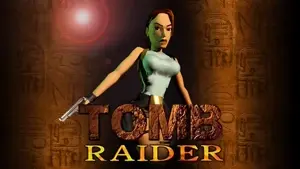
About Tomb Raider: The Last Revelation
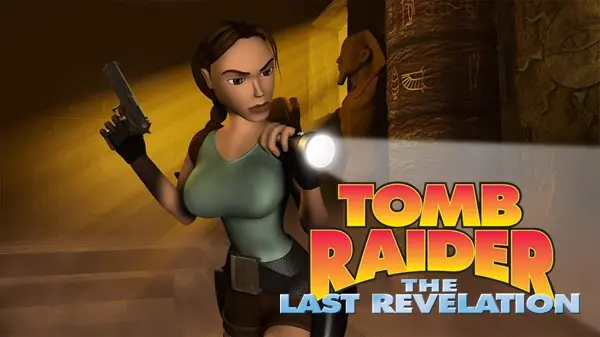
Tomb Raider: The Last Revelation is an action-adventure game developed by Core Design and published by Eidos Interactive, released in 1999 for PlayStation, PC, and Sega Dreamcast. It is the fourth main entry in the Tomb Raider series and is often noted for returning the focus to exploration-heavy gameplay set within a single, deeply interconnected world.
The story begins with a young Lara Croft uncovering an ancient artifact in Cambodia, unknowingly triggering a chain of events tied to the Egyptian god Set. The narrative then shifts primarily to Egypt, where much of the game takes place inside sprawling tomb complexes, temples, and underground chambers hidden beneath the desert.
Unlike the more globe-trotting structure of earlier entries, The Last Revelation concentrates heavily on a single region, allowing environments to feel more continuous and logically connected. The game leans into atmosphere and isolation, with dimly lit corridors, collapsing ruins, and environmental storytelling playing a larger role than before.
Puzzle design is more elaborate, often requiring multi-step solutions that span different rooms or sections of a tomb. The game also places greater emphasis on trap navigation, with carefully timed movement and observation becoming essential for survival.
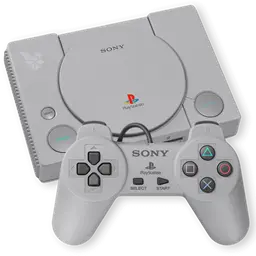
Players visiting Emulator Games Zone can experience Tomb Raider: The Last Revelation through the PlayStation emulator and revisit one of the most atmospheric and puzzle-focused entries in Lara Croft’s early adventures.
How To Play
Tomb Raider: The Last Revelation retains the third-person exploration structure of the series but introduces more interconnected level design and complex environmental puzzles. Players control Lara Croft as she explores ancient Egyptian tombs filled with traps, secrets, and hidden passageways.
Movement remains precise and deliberate. Jumping across gaps, climbing ledges, and navigating narrow corridors requires careful alignment. Many areas are designed with verticality in mind, encouraging players to think in three dimensions when solving traversal challenges.
Combat exists but is not the central focus. Lara uses a range of weapons collected during exploration, but encounters are generally spaced out to maintain a stronger emphasis on exploration and puzzle-solving rather than constant fighting.
Puzzle progression is more layered than in earlier titles. Players may need to activate mechanisms in one chamber to affect another, or carry items across multiple sections of a tomb. This interconnected structure makes each area feel like part of a larger ancient system rather than isolated rooms.
Trap sequences are more frequent and often more punishing. Timing-based sections involving spikes, falling floors, and shifting platforms require patience and observation. Mistakes can lead to instant failure, reinforcing the importance of learning each environment’s layout.
The overall experience is slower and more methodical, focusing on immersion inside a single continuous Egyptian setting. Each tomb feels like a self-contained archaeological puzzle, gradually revealing the larger mystery behind Lara’s journey.