





About Harvest Moon DS: Grand Bazaar
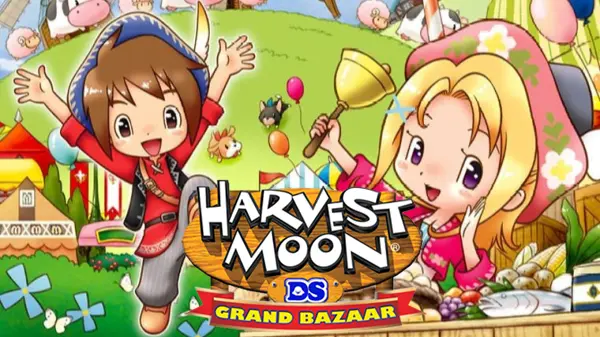
Harvest Moon DS: Grand Bazaar is a farming simulation game developed by Marvelous Interactive and released by Natsume for the Nintendo DS in 2008 in Japan, later arriving in other regions in 2010. Unlike earlier entries that focus mainly on expanding farmland and raising livestock, this installment shifts its attention toward trade, turning the weekly bazaar into the heart of daily life.
The story takes place in Zephyr Town, once famous for its lively marketplace but now struggling with a quiet, declining economy. The player arrives as a new farmer tasked with helping restore the town’s reputation by reviving the local bazaar. Instead of simply shipping goods each day, the entire community depends on how well the weekly market performs.
Farming still plays a central role, but crops and animal products are no longer just passive income sources. Everything grown on the farm is prepared specifically for sale at the bazaar, where timing, presentation, and variety directly influence profits. As the market improves, new stalls and vendors gradually return to town.
Wind also plays a unique role in this version. Strong gusts can speed up travel using windmills, assist in processing goods, and even affect how efficiently farm work is completed. This adds a subtle rhythm to daily planning, making weather feel more interactive than in earlier titles.
Players visiting Emulator Games Zone can experience Harvest Moon DS: Grand Bazaar directly through the NDS emulator and explore a farming life built around commerce, rhythm, and weekly market days.
How To Play
Harvest Moon DS: Grand Bazaar structures gameplay around a weekly cycle instead of purely daily farming. Each in-game week leads up to the bazaar, where all harvested crops, animal products, and crafted goods are sold directly to townspeople. Preparing for this event becomes the main focus of progression.
Early gameplay starts with a small farm and limited tools. Most days are spent planting crops, caring for animals, and gathering materials that can later be sold at the market. Unlike earlier Harvest Moon games, shipping bins play a smaller role, and success depends more on how well players manage inventory for the bazaar.
The wind system introduces a different layer of strategy. Windmills can be used to process raw materials into higher-value goods, but their efficiency depends on wind strength. Planning production around weather conditions becomes an important part of maximizing profits.
Animal care remains a steady source of income. Chickens, cows, sheep, and alpacas produce goods that sell well at the bazaar, especially when processed into higher-quality items. Regular care improves output, making consistency more valuable than occasional bursts of activity.
Raising the town’s reputation is directly tied to bazaar performance. As sales increase, new shops open, villagers return, and more opportunities become available. This creates a loop where farming success is immediately reflected in the growth of Zephyr Town itself.
Controls are designed for DS play, combining simple movement with quick tool access. The experience focuses on preparing for market day rather than isolated tasks, giving each week a clear purpose and making every sale feel like part of a larger rebuilding effort.