







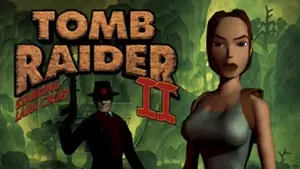
About Tomb Raider
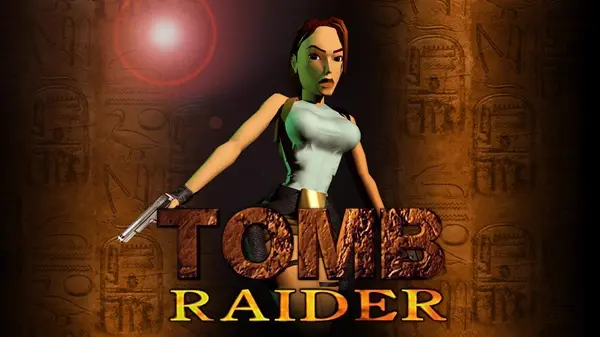
Tomb Raider is an action-adventure game developed by Core Design and published by Eidos Interactive, first released in 1996 for PlayStation, Sega Saturn, and MS-DOS. It is the debut entry in the long-running Tomb Raider series and introduces Lara Croft, an archaeologist-adventurer who explores ancient ruins in search of powerful artifacts.
The game follows Lara as she is hired to recover a mysterious artifact known as the Scion. What begins as a straightforward expedition quickly turns into a journey through forgotten tombs, underground cities, and remote ruins filled with traps and hostile wildlife. The structure is built around isolated locations rather than a continuous world, giving each area its own atmosphere and challenges.
Unlike later action-heavy sequels, the original Tomb Raider leans more toward exploration and puzzle-solving. Movement is deliberate, and environments are designed around platforming precision, requiring careful timing when jumping across gaps or navigating narrow ledges. Combat exists, but it often feels secondary to exploration and survival inside ancient structures.
Lara Croft’s design also became one of the most recognizable elements of the game, but the core experience is built around isolation and discovery rather than constant action. Each tomb feels like a self-contained puzzle space, where observation and patience matter more than speed.
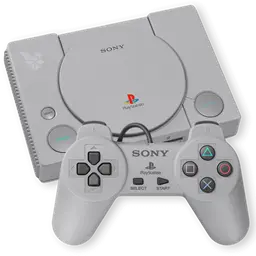
Players visiting Emulator Games Zone can experience Tomb Raider through the PlayStation emulator and revisit one of the most influential 3D adventure games that helped define the genre.
How To Play
Tomb Raider uses a third-person perspective where movement and environmental awareness are the core of progression. Players control Lara as she climbs, jumps, swims, and explores complex ruins filled with traps and hidden paths.
Navigation is often the main challenge. Many areas require precise platforming, such as timed jumps between moving platforms, climbing ledges, or carefully positioning before taking a leap. A single mistake can send Lara back to a previous checkpoint or force a retry of a difficult sequence.
Combat is present but relatively minimal compared to exploration. Lara uses dual pistols with unlimited ammo, allowing players to focus more on positioning and survival rather than resource management. Enemies typically appear in enclosed areas or near puzzle sections, breaking up exploration segments.
Puzzle-solving plays a major role in progression. Players must find switches, keys, and hidden mechanisms to unlock new areas. Many puzzles are integrated into the environment itself, requiring observation of architecture and trap patterns rather than direct clues.
Swimming sections add another layer of challenge, as underwater navigation is slower and more dangerous. Air supply becomes a constant concern, forcing players to plan routes carefully when exploring submerged areas.
The overall experience is built around patience, spatial awareness, and learning how each environment behaves. Progress is steady and methodical, with each tomb acting as a self-contained challenge that gradually leads deeper into Lara Croft’s archaeological journey.