

















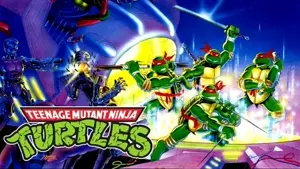
About Teenage Mutant Ninja Turtles: Turtles in Time
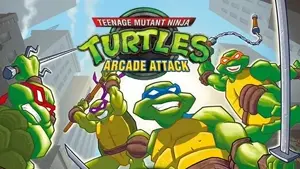
Teenage Mutant Ninja Turtles: Turtles in Time is a side-scrolling beat ’em up developed and published by Konami in 1991. It originally appeared in arcades before being adapted for the Super Nintendo Entertainment System, becoming one of the most iconic entries in the TMNT franchise. The game takes the turtles out of present-day New York and sends them through time after Shredder steals the Statue of Liberty and launches them into a chaotic mix of prehistoric landscapes, pirate ships, and futuristic cities.
Leonardo, Michelangelo, Donatello, and Raphael are all playable, and the game is built around fast, arcade-style combat where timing and positioning matter more than complex systems. Each stage has its own theme, moving from sewer openings and city streets into unexpected time periods where enemies range from Foot Soldiers to robotic versions of familiar villains. The tone stays light and cartoon-like, but the action rarely slows down.
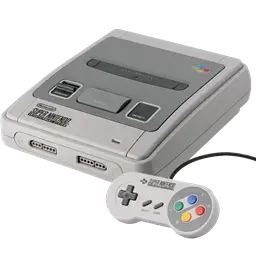
The arcade version is especially known for its bright visuals and smooth four-player co-op, while the SNES release added slightly different stages, adjusted boss fights, and the well-known “throw enemies toward the screen” mechanic that became a signature feature of the series.
Originally released for arcade cabinets and later the SNES, Turtles in Time remains one of Konami’s most celebrated action games. On Emulator Games Zone, players can revisit this classic through the Arcade emulator and jump straight into its time-hopping battles from any modern browser.
How To Play
Turtles in Time is built around straightforward beat ’em up combat where you pick one of the four turtles and move through side-scrolling stages filled with enemies. The controls are simple—attack, jump, and dash—but fights quickly become chaotic as groups of Foot Soldiers surround you from both sides.
Each turtle has slightly different reach and speed, which becomes noticeable when dealing with larger enemy waves or bosses that move across the screen quickly. Donatello’s longer weapon reach makes spacing easier, while Raphael and Michelangelo rely more on close-range pressure and fast movement.
One of the most memorable mechanics in this game is the ability to grab enemies and throw them into the background or toward the screen. This SNES-style mechanic adds extra damage options and helps clear space when the screen gets crowded, especially during boss encounters or multi-enemy rushes.
Stages are built around variety rather than complexity. One moment you’re fighting on a pirate ship deck during a storm, and the next you’re dealing with enemies in a futuristic city filled with moving platforms and hazards. These shifts keep the pace fresh and make each stage feel distinct without changing the core combat loop.
Compared to earlier TMNT beat ’em ups, Turtles in Time feels faster and more reactive. Enemies don’t wait around, so staying mobile and learning when to dash or interrupt attacks is often more important than simply button-mashing through waves.