






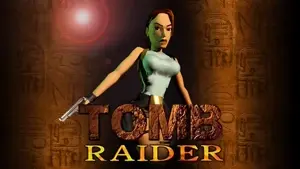
About Tomb Raider: Curse of the Sword
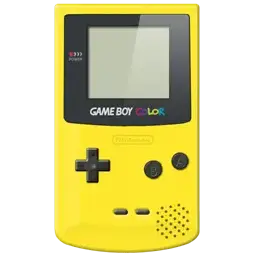
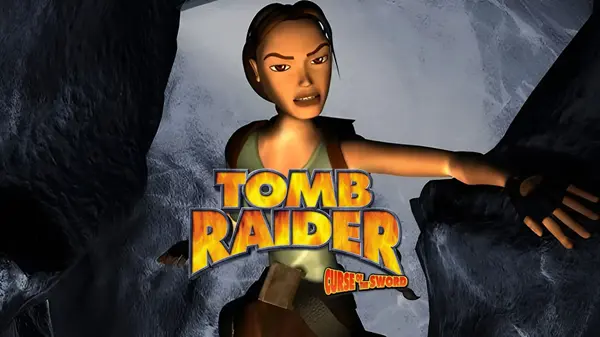
Tomb Raider: Curse of the Sword is an action-adventure game developed by Core Design and released in 2001 for the Game Boy Color. It is part of the early handheld spin-offs of the Tomb Raider series, centered around Lara Croft, an archaeologist known for exploring ancient ruins, retrieving cursed artifacts, and surviving environments filled with traps and hidden dangers.
The story begins when Lara becomes connected to a mysterious cursed sword tied to an old ritual. The artifact is not just a relic, but something that seems to carry a lingering force that affects anyone who comes near it. Her investigation leads her through various locations filled with ancient structures, underground passages, and guarded ruins, where every step forward is tied to uncovering more about the sword’s origin and the people who tried to control it.
Unlike the main 3D console entries of the time, this version was built specifically for the Game Boy Color, using a top-down perspective and a more compact adventure structure. The design focuses on small interconnected areas rather than large environments, making exploration more segmented and puzzle-oriented. Despite the hardware limitations, it keeps the Tomb Raider identity through its emphasis on traps, exploration, and artifact-driven progression.
On Emulator Games Zone, this title can be played through a Game Boy Color emulator, bringing Lara Croft’s handheld adventure back in a format that runs directly in the browser.
How To Play
Gameplay in Curse of the Sword is presented from a top-down perspective where movement is tile-based and navigation depends heavily on reading the environment carefully. Lara moves through structured rooms connected by narrow paths, doors, and hidden passages that often require exploration before their purpose becomes clear.
Progress is driven by exploration rather than direct guidance. Many areas appear blocked at first, and advancement depends on finding switches, keys, or hidden triggers scattered across earlier rooms. Backtracking is common, as newly discovered items often unlock paths that were previously inaccessible.
Combat is simple and fast-paced. Enemies appear in confined spaces, and encounters are usually short exchanges rather than prolonged fights. Positioning matters more than attack variety, since the limited controls focus on straightforward movement and timing.
Puzzle elements are embedded into the environment. Some require pushing objects, activating hidden mechanisms, or discovering routes that are not immediately visible. The layout often encourages careful scanning of each screen, since important details can be easily missed in the compact map design.
As players move deeper into the adventure, the structure gradually expands through interconnected zones, creating a loop of exploration, unlocking new areas, and revisiting earlier sections with new access routes opened by collected items and story progression.