




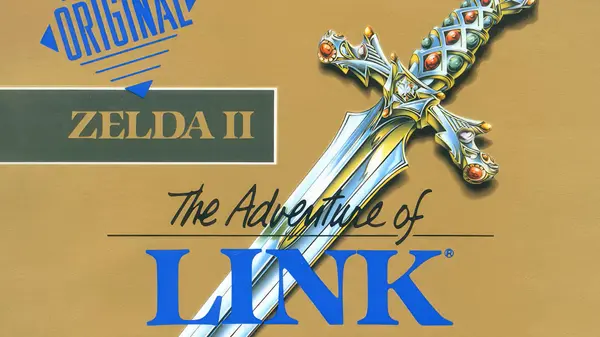

About Zelda II: The Adventure of Link
Zelda II: The Adventure of Link is an action RPG developed by Nintendo and released for the Nintendo Entertainment System in 1987. Unlike the original The Legend of Zelda, this sequel takes the series in a very different direction by combining side-scrolling combat with RPG-style leveling systems and a larger overworld adventure.
The story takes place several years after the first game. Link discovers that Princess Zelda has fallen into an eternal sleep caused by an ancient curse. To awaken her, he must travel across Hyrule, place crystals inside dangerous palaces, and uncover the secret of the Triforce hidden deep within the kingdom.
One of the biggest differences in Zelda II is its gameplay structure. Exploration still happens on a top-down overworld map, but towns, caves, palaces, and combat areas shift into side-scrolling action sequences. This change gives the game a much more combat-heavy feeling compared to the exploration-first design of the original Zelda.
The game also introduces RPG mechanics rarely seen in console action games at the time. Defeating enemies rewards experience points that can be used to improve Link’s attack power, magic ability, and life meter. Magic spells also play a much larger role, allowing Link to heal, jump higher, shield himself, or transform for specific puzzles and situations.
Zelda II became known for its higher difficulty and more technical combat. Enemy fights require careful timing, shield positioning, and precision movement, especially during later palace sections filled with aggressive enemies and dangerous platforming challenges.
Even decades later, Zelda II still feels unique inside the Zelda series because of how boldly it experimented with side-scrolling action and RPG mechanics instead of simply repeating the first game’s formula.
How To Play
In Zelda II: The Adventure of Link, players guide Link across a large overworld while entering towns, caves, and palaces that switch into side-scrolling action gameplay. Combat focuses heavily on sword fighting, shield defense, jumping attacks, and precise timing.
Unlike the first Zelda, enemies must often be fought directly instead of avoided. Players can attack high or low, crouch to defend, and carefully position shields against incoming attacks or projectiles. Some enemies block attacks aggressively, making battles feel more tactical than earlier NES action games.
Experience points are earned by defeating enemies and completing palace sections. Players can level up Link’s attack strength, magic power, and health, giving the game a stronger RPG structure compared to the original Zelda.
Magic spells become an important part of progression. Certain spells allow Link to recover health, jump over obstacles, reduce damage, or access hidden areas needed to continue the adventure. Managing magic points is especially important during longer palace sections.
The palaces themselves combine platforming, combat, keys, hidden paths, and boss fights. Compared to the first game’s top-down dungeons, these areas feel more dangerous because of narrow platforms, lava pits, flying enemies, and fast sword-fighting encounters that require careful reactions.