




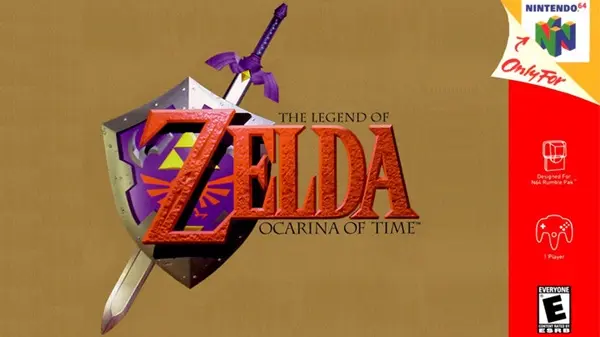


About The Legend of Zelda: Ocarina of Time
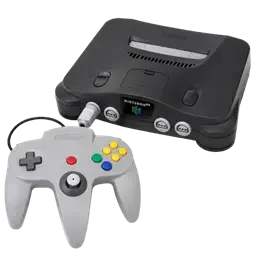
The Legend of Zelda: Ocarina of Time is an action-adventure game developed by Nintendo and released for the Nintendo 64 in 1998. It was the first fully 3D Zelda game and became one of the most influential console adventures of its era because of how naturally it translated exploration, combat, and puzzle-solving into a three-dimensional world.
The story follows Link as he leaves Kokiri Forest and becomes involved in a growing conflict surrounding the Triforce, Princess Zelda, and the rise of Ganondorf. The adventure spans both Link’s childhood and adulthood, with Hyrule changing dramatically across different time periods as the story progresses.
What made Ocarina of Time feel special at release was the sense of scale and immersion. Hyrule Field connected towns, forests, lakes, mountains, deserts, and temples into a world that felt massive compared to earlier Zelda games. Day and night cycles, horseback travel, dynamic music, and cinematic storytelling all helped the world feel more alive.
The game also introduced mechanics that later became standard across 3D action games. Z-targeting allowed players to lock onto enemies during combat, making sword fights and movement easier to control in 3D environments. This system heavily influenced future adventure and action games far beyond the Zelda series itself.
The ocarina instrument plays a central role throughout the adventure. By learning melodies, Link can change time, summon rain, warp across Hyrule, and solve environmental puzzles. Music becomes directly tied to gameplay progression instead of simply acting as background atmosphere.
Even years later, Ocarina of Time remains one of the defining Nintendo 64 experiences because of its world design, memorable dungeons, emotional story moments, and smooth transition from classic 2D Zelda gameplay into 3D exploration.
How To Play
In Ocarina of Time, players control Link in a fully 3D version of Hyrule while exploring towns, dungeons, forests, temples, and open environments filled with puzzles and enemies.
Combat combines sword attacks, shields, ranged weapons, and item-based strategies. The Z-targeting system allows players to lock onto enemies during fights, circle around opponents, block attacks, and use directional movement more precisely during combat encounters.
The ocarina itself is one of the game’s most important mechanics. Players learn songs throughout the adventure that trigger special effects such as teleportation, weather changes, opening hidden paths, or manipulating time. Many puzzles and story events require remembering and performing specific melodies.
Dungeons are larger and more cinematic than earlier Zelda games, often featuring rotating rooms, moving platforms, environmental puzzles, and multi-stage boss battles. Each major dungeon introduces unique tools like the Hookshot, Bow, or Megaton Hammer that become essential for later exploration.
Travel and exploration also play a much bigger role compared to previous Zelda titles. Players can ride across Hyrule on horseback, discover hidden grottos, complete side quests, fish, collect upgrades, and interact with NPCs across different time periods. The shift between young Link and adult Link changes both gameplay and world progression throughout the story.