








About Bomberman 64
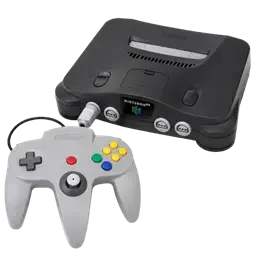
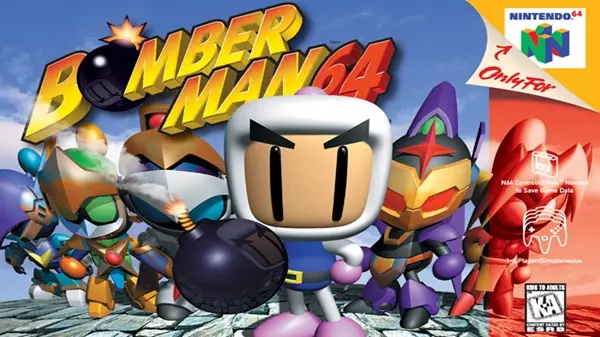
Bomberman 64 is a 3D action puzzle game developed by Hudson Soft and released for the Nintendo 64 in 1997. Instead of simply repeating the classic top-down maze formula, the game completely reimagined Bomberman in full 3D, giving the series a very different feel compared to the earlier SNES and Saturn titles.
The story follows Bomberman as he fights against the robotic Altair empire after several planets come under attack. While the overall setup is simple, the game places more focus on exploration and platforming than previous entries. Stages are larger, more open, and filled with moving platforms, switches, environmental hazards, and hidden paths that encourage players to experiment instead of simply rushing to exits.
One of the biggest changes in Bomberman 64 is the bomb system itself. Instead of only placing standard bombs, players can pick up and throw bombs, stack them together, or create powerful combinations with different explosion effects. Certain bomb types can freeze enemies, create remote detonations, or trigger larger chain reactions that help solve puzzles and defeat bosses.
The game also has a very different atmosphere compared to earlier Bomberman titles. The soundtrack feels more ambient and mysterious, and some levels focus heavily on isolation, dangerous machinery, or environmental puzzles rather than nonstop arcade action. For many players, Bomberman 64 stands out because it feels more like an adventure-platformer hybrid than a traditional maze game.
Multiplayer is still included, but the single-player mode is the main focus this time. The shift to 3D gave the series a more experimental style, and even today Bomberman 64 remains one of the most unique games in the franchise.
How To Play
In Bomberman 64, players explore large 3D stages while using bombs to defeat enemies, activate switches, solve puzzles, and navigate dangerous environments. Unlike earlier Bomberman games with grid-based movement, this version allows free movement around platforms, narrow walkways, and rotating structures.
The bomb mechanics are much more advanced than previous entries. Players can pick up bombs, carry them, throw them across gaps, and combine bomb effects to create stronger attacks. Different bomb combinations unlock special abilities such as remote-controlled explosions, ice bombs, and powerful line attacks useful against tougher enemies and bosses.
Stages often focus on platforming and environmental puzzles instead of simple maze clearing. Some areas require careful timing to cross moving platforms, while others use switches, traps, and hidden routes that can only be reached with certain bomb techniques.
Boss battles are also larger and more cinematic than earlier Bomberman games. Many bosses require players to use the environment strategically instead of simply placing bombs nearby. Positioning and movement become more important once arenas start collapsing or filling with hazards.
The multiplayer Battle Mode keeps the classic competitive style but adapts it to 3D arenas. Players can still trap opponents with explosions and chain reactions, though movement and positioning feel very different compared to the older 2D Bomberman games.