






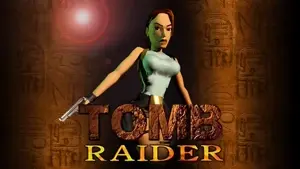
About Tomb Raider: Underworld
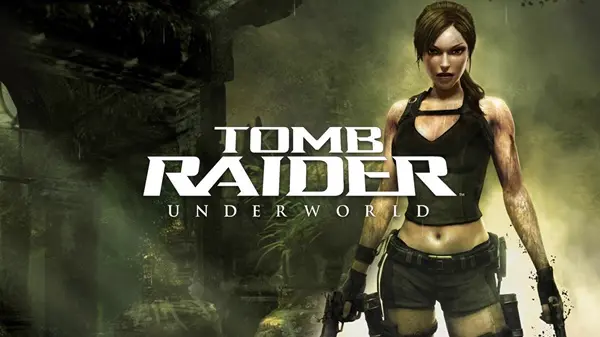
Tomb Raider: Underworld is an action-adventure game developed by Crystal Dynamics and released in 2008 by Eidos Interactive. It continues the modern-era storyline of Lara Croft, an archaeologist who investigates ancient civilizations, mythological artifacts, and long-buried ruins that often hide more than just historical secrets.
The core narrative is built around Norse mythology, especially the myth of Thor’s hammer, Mjolnir, and the idea of a hidden realm beneath the ocean. Lara’s investigation begins after traces of lost archaeological evidence point toward connections between different ancient sites around the world. This leads her across multiple regions, including submerged Mediterranean ruins, overgrown jungle temples in Thailand, and frozen Arctic structures partially buried under ice. Each location is tied to fragments of the same mystery, gradually forming a larger picture that connects ancient myths with Lara’s own family history.
The game was originally released on PlayStation 3, Xbox 360, and PC, with additional versions appearing on Wii, PlayStation 2, and Nintendo DS. While the main console versions focus on large-scale 3D exploration and cinematic traversal, each platform adapts the experience differently based on hardware limitations and design choices.
The Nintendo DS version stands out as a more compact interpretation of the adventure, reshaping the game into an isometric exploration format with a stronger emphasis on puzzles and room-based progression. Instead of expansive environments, it presents tightly designed areas where movement, observation, and item usage define progression.
Players can experience this DS adaptation on Emulator Games Zone through an NDS emulator, where Lara’s handheld journey can be accessed directly in a browser-based environment without setup.
How To Play
This version of Tomb Raider: Underworld focuses on isometric movement and environmental problem-solving. Lara Croft navigates structured rooms and interconnected ruins where progression depends on understanding how each space links to the next rather than following a linear path.
Exploration is central to gameplay. Many areas are designed with locked sections, hidden switches, and multi-step mechanisms that require players to revisit earlier rooms after finding new items or unlocking new interactions. The environment itself acts like a layered puzzle, where progress often comes from noticing details that were previously inaccessible.
Interaction is context-based and position-sensitive. Lara must stand in precise locations to activate mechanisms, examine relics, or manipulate ancient devices built into the ruins. Small adjustments in positioning can determine whether an object can be triggered, making careful movement essential throughout exploration.
The puzzle structure relies heavily on collected items. Tools and relics found during exploration are not optional collectibles—they are required to open paths or solve environmental challenges that may span multiple rooms. Some puzzles involve combining clues gathered from different areas, reinforcing the importance of memory and observation.
Combat is limited and secondary to exploration. Encounters are brief and often overshadowed by environmental hazards such as spike traps, collapsing floors, and timed platforms. These elements shift the challenge toward navigation and timing rather than direct confrontation.
The overall experience is built around gradual discovery, where each newly obtained item reshapes how earlier areas can be approached, creating a continuous loop of exploration, unlocking, and re-exploration.