




About Mario’s Super Picross
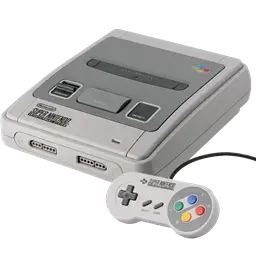
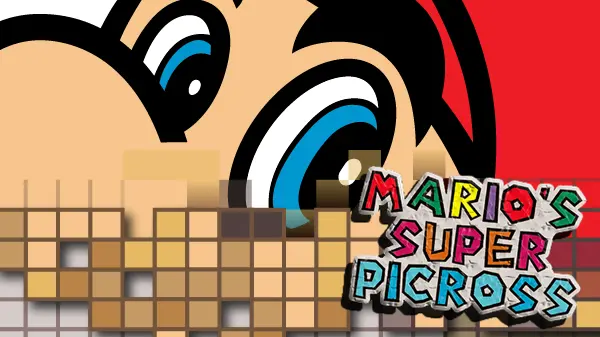
Mario’s Super Picross is a logic puzzle game developed by Ape Inc. and Jupiter Corporation, and published by Nintendo for the Super Nintendo Entertainment System (SNES) in 1995. It builds upon the foundation established by Mario’s Picross on the Game Boy, expanding the puzzle selection while introducing new gameplay options that make the experience deeper for both newcomers and experienced nonogram fans.
Instead of platforming through the Mushroom Kingdom, Mario returns as a skilled stone carver who reveals hidden images by solving number-based puzzles. Every puzzle begins as a blank grid surrounded by numerical clues, and careful deduction gradually uncovers detailed pixel art hidden beneath the stone. The larger grids available on the SNES allow for more intricate pictures and more satisfying puzzle solutions than the original handheld release.
One of the biggest additions is the introduction of Wario Mode, which changes the rules entirely. Unlike Mario's puzzles, Wario's challenges remove mistake penalties, leaving players to rely solely on logic without automatic feedback. This creates a noticeably different experience that rewards careful planning and appeals to players looking for a greater challenge.
You can enjoy Mario’s Super Picross on Emulator Games Zone using our SNES Emulator, giving you an easy way to experience one of Nintendo's finest classic nonogram games directly in your browser.
How To Play
Each puzzle presents a grid with numerical clues displayed beside every row and column. These numbers indicate how many connected squares belong in each line. Your objective is to interpret every clue correctly, chip away unnecessary blocks, and reveal the hidden picture underneath.
In Mario Mode, incorrect moves result in time penalties, encouraging careful observation before making each decision. As puzzle sizes increase, you'll often need to combine information from multiple rows and columns before confidently marking any squares.
The exclusive Wario Mode offers a completely different approach. Mistakes are no longer highlighted, meaning the game provides no immediate indication that you've made an error. Instead, every solution depends entirely on logical deduction, making these puzzles considerably more demanding than those found in Mario Mode.
The SNES version also features significantly larger puzzle collections and more detailed images than the original Game Boy game. As you progress, increasingly complex grids require long-term planning and pattern recognition, providing a satisfying challenge for anyone who enjoys solving carefully designed logic puzzles.