




About Rayman: Raving Rabbids
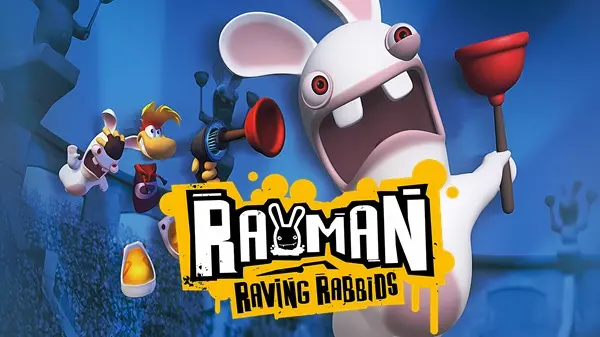
Rayman: Raving Rabbids is a quirky action-adventure and mini-game collection developed by Ubisoft and released in 2006. Originally conceived as a new Rayman platforming adventure, the game eventually evolved into something entirely different, introducing players to the Rabbids—wild, unpredictable rabbit-like creatures that would go on to become some of Ubisoft's most recognizable characters.
The story begins when Rayman is suddenly captured during a Rabbid invasion. Along with a group of other prisoners, he is forced to participate in a series of strange challenges and arena contests to entertain his captors. Rather than following a traditional platforming structure, the game presents a collection of increasingly bizarre events that range from races and target-shooting challenges to rhythm games and survival scenarios.
The Rabbids are the true stars of the adventure. Their chaotic behavior, strange noises, and completely irrational actions create many of the game's funniest moments. Whether they're charging into walls, dressing in ridiculous costumes, or causing trouble wherever they go, the Rabbids constantly turn simple situations into something unexpected.
The Game Boy Advance version offers a noticeably different experience from the console releases. Instead of focusing entirely on motion-controlled mini-games, the GBA version combines side-scrolling action, platforming, exploration, and mini-game challenges into a more traditional handheld adventure. Players guide Rayman through various environments while escaping Rabbid-controlled areas, collecting items, and overcoming obstacles across numerous levels.
The game was released for multiple platforms, including Wii, PlayStation 2, Xbox 360, PC, Nintendo DS, and Game Boy Advance. While every version shares the same Rabbid-themed universe, the GBA release stands out by retaining more classic Rayman-style gameplay elements alongside the series' trademark humor.
Today, players can enjoy Rayman: Raving Rabbids on Emulator Games Zone using a GBA emulator, making it easy to revisit this unusual chapter in Rayman's history directly from a web browser.
How To Play
In the Game Boy Advance version of Rayman: Raving Rabbids, gameplay focuses on side-scrolling action and platforming rather than the motion-controlled mini-game format found on home consoles. Players control Rayman as he navigates a variety of levels filled with Rabbids, environmental hazards, moving platforms, and collectible items.
Rayman can run, jump, climb, and use his signature attacks to deal with enemies encountered throughout the adventure. Levels often require careful timing, especially when crossing moving platforms, avoiding traps, or navigating narrow pathways. Some areas introduce puzzle-like obstacles that must be solved before progress can continue, encouraging players to explore their surroundings instead of simply rushing to the finish.
Throughout the game, players encounter numerous Rabbid-themed challenges. Certain stages shift away from traditional platforming and introduce mini-games that test reflexes, timing, or quick decision-making. These sections help break up the action and reflect the chaotic personality of the Rabbids while keeping gameplay varied from one level to the next.
Collectibles are scattered throughout the adventure, rewarding exploration and careful observation. Hidden items, bonus areas, and optional objectives encourage players to revisit stages and search for secrets they may have missed during their first run.
Boss encounters appear at key points in the story and typically require learning attack patterns rather than relying on simple button-mashing. Some bosses use environmental hazards or unique mechanics that differ from regular enemies, making these battles memorable highlights of the adventure.
Compared to the console versions, the GBA release places a much greater emphasis on platforming, exploration, and level progression. The combination of classic Rayman movement, Rabbid-themed humor, and handheld-friendly stage design gives this version its own identity, making it feel more like a traditional Rayman adventure with a Rabbid twist rather than a pure mini-game collection.