














About Mario & Luigi: Partners in Time
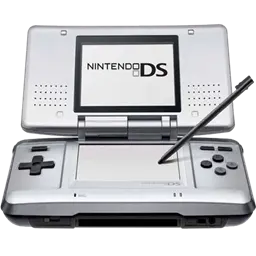
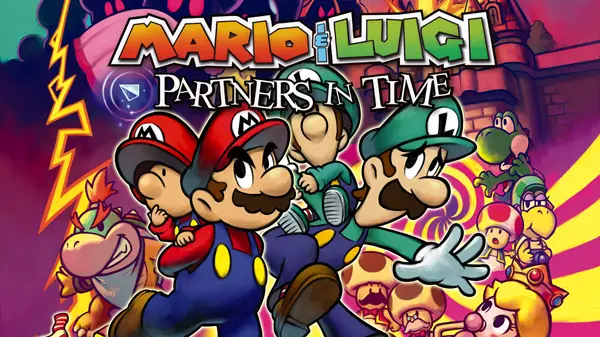
Mario & Luigi: Partners in Time is a turn-based role-playing game developed by AlphaDream and published by Nintendo for the Nintendo DS in 2005. It is part of the Mario RPG sub-series and continues the blend of humor, timing-based combat, and exploration, while adding a time-travel storyline that connects both present-day Mushroom Kingdom and its past version.
The story begins when Mario and Luigi travel through time and meet their baby counterparts—Baby Mario and Baby Luigi. From there, the adventure splits across two timelines, with both adult and baby versions of the brothers working together to solve puzzles and battle enemies. The structure alternates between exploring environments in the present and interacting with the past, where certain obstacles can only be solved by coordinating both pairs.
This dual-character setup is the defining feature of the game. On Emulator Games Zone, it can be played through a NDS Emulator, bringing the full dual-screen handheld experience directly into the browser.
How To Play
Mario & Luigi: Partners in Time uses a turn-based battle system where timing and input precision matter as much as strategy. Players control both adult Mario & Luigi and their baby counterparts during battles, executing attacks that require button timing to increase damage or reduce incoming hits.
Exploration is divided between controlling the two pairs separately or together, depending on the situation. In some areas, both teams must work in coordination—one group may activate switches or clear obstacles while the other progresses through different parts of the map. This split-control structure is central to puzzle solving throughout the game.
Combat introduces combination attacks involving all four characters. These moves require sequential inputs and timing accuracy, making battles more interactive than standard turn-based RPGs. Enemies also vary in behavior, sometimes targeting one pair more heavily, which forces players to manage positioning and defense carefully.
As the game progresses, puzzles become more layered, often requiring switching between timelines or coordinating actions between past and present versions of the same location. Success depends on how well players manage both teams simultaneously while maintaining rhythm-based timing in combat encounters.