






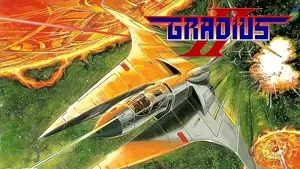

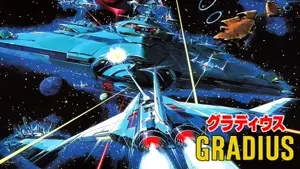
About Salamander 2
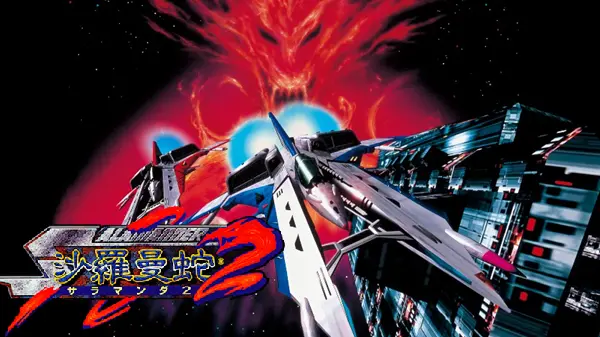
Salamander 2 is a side-scrolling shoot ’em up developed and published by Konami, first released in arcades in 1996. It serves as a direct continuation of the Salamander universe, itself a spin-off of the Gradius series, bringing back the same blend of fast-paced shooting and strange organic sci-fi environments.
Compared to earlier entries, Salamander 2 leans heavily into dense visual design and more aggressive enemy pressure. Stages are filled with shifting mechanical structures, glowing biological textures, and layered backgrounds that make each area feel constantly in motion. The game doesn’t slow down much either—enemy waves appear quickly, often forcing you to react before the screen fully settles.
The core structure keeps the familiar horizontal shooting format, but the pacing feels sharper and more controlled. Instead of long build-ups, Salamander 2 tends to throw players directly into high-intensity sections, with bosses and mid-stage threats arriving earlier and more frequently.
Power-ups still play a central role, with weapon upgrades shaping how each run develops. Different weapon types change how you handle crowd control versus focused damage, and choosing the right setup early can make later stages noticeably easier or far more chaotic.
On Emulator Games Zone, you can play the Arcade version of Salamander 2 directly in your browser using an Arcade emulator and experience one of Konami’s later-era shoot ’em ups as it originally appeared in arcades.
How To Play
In Salamander 2, you control a fighter ship moving through horizontally scrolling stages filled with enemy formations, environmental hazards, and large boss encounters. Movement is simple, but survival depends on staying constantly aware of what’s coming from both sides of the screen.
Enemies drop power-up items that enhance your ship’s weapons. Unlike slower, more methodical shooters, Salamander 2 pushes you to collect upgrades quickly while staying mobile, since enemy fire often overlaps with item drops. This creates a fast rhythm where positioning matters just as much as firepower.
Stages are designed with layered threats—foreground obstacles, background hazards, and mid-air enemies often appear at the same time. Some sections feel almost crowded, requiring you to thread through tight spaces while maintaining steady fire.
Boss fights are more frequent and often arrive with little warning. Many are built around multi-part structures with distinct attack phases, and learning their patterns becomes essential as later stages increase in speed and intensity.
Compared to earlier Salamander entries, this game feels more modern in its pacing, with tighter stage flow and heavier on-screen action. Success comes from quick reactions, efficient weapon use, and learning how to stay calm when the screen becomes packed with overlapping threats.