













About Donkey Kong Jr.
Donkey Kong Jr. is a classic 2D arcade platform game released by Nintendo in 1982 for arcades, later ported to home systems like the NES. Developed and published by Nintendo, it is the direct sequel to the original Donkey Kong and flips the original formula in a clever way.
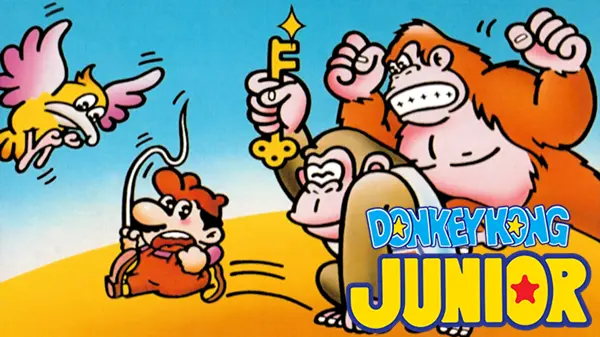
This time, the roles are reversed: Donkey Kong has been captured by Mario (formerly Jumpman), and it’s up to his son, Donkey Kong Jr., to rescue him. Instead of playing as Mario, players control Junior, a small but determined ape climbing vines, chains, and platforms to reach the top of each stage.
The game keeps the classic arcade-style challenge but introduces a new movement system focused on vertical climbing. Unlike the original game’s barrel-dodging gameplay, Donkey Kong Jr. emphasizes agility, timing, and careful navigation through hazards set by Mario.
Each stage is built around ascending vertically while avoiding enemies, obstacles, and environmental traps. The unique perspective of playing as the “villain’s son” adds a fun twist to the familiar Donkey Kong universe and makes the game stand out in early arcade history.
How To Play
In Donkey Kong Jr., players control Junior through 2D side-scrolling arcade platform stages focused on climbing and vertical movement.
The main goal in each level is to rescue Donkey Kong, who is being held at the top of the stage. To do this, players must climb vines, chains, and platforms while avoiding enemies and hazards sent by Mario.
Movement is centered around vertical navigation. Junior can climb up and down vines, jump between platforms, and time his movements carefully to avoid enemies like birds and mechanical obstacles. Precision is key, as mistimed jumps or slow reactions can easily result in losing a life.
Each stage introduces different layouts and enemy patterns, requiring players to adapt their climbing route and timing. Some sections demand quick switching between vines, while others require careful planning to avoid enemy patrols.
As the game progresses, stages become more complex and fast-paced, with tighter spacing, more aggressive enemies, and trickier vertical routes. Success depends on mastering climbing control and reading enemy movement patterns while steadily advancing toward Donkey Kong’s rescue.