














About Donkey Kong
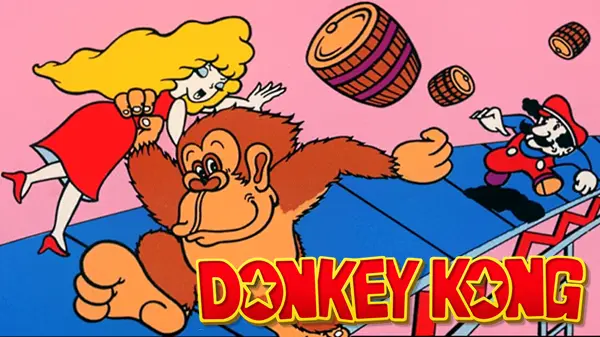
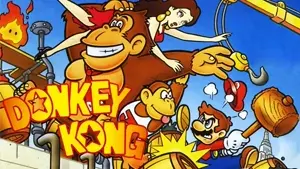
Donkey Kong is a classic arcade-style platform game originally released by Nintendo in 1981. Developed and published by Nintendo, it is one of the most important early video games in history and marks the first appearance of both Donkey Kong and Mario (known at the time as “Jumpman”).
The game’s story is simple but iconic: Donkey Kong has captured a woman named Pauline and taken her to the top of a construction site. The player controls Jumpman, who must climb platforms, avoid hazards, and rescue her while facing the massive ape throwing barrels and other obstacles along the way.
Donkey Kong helped define the platforming genre, introducing vertical level design, timed obstacle navigation, and pattern-based enemy behavior. Each stage presents a different challenge, gradually increasing in difficulty as players climb higher toward the final confrontation.
The game’s structure is straightforward but demanding, focusing on precision, timing, and learning enemy movement patterns. Its influence can still be seen across countless platform games that followed.
How To Play
In Donkey Kong, players control Jumpman through side-view platform stages filled with moving hazards, enemies, and construction obstacles.
The main objective in each level is to reach the top of the stage and rescue Pauline. To do this, players must climb ladders, jump across platforms, and avoid incoming hazards such as barrels, fireballs, and moving machinery.
Donkey Kong himself throws barrels and other objects from above, which roll and bounce down platforms in predictable but increasingly challenging patterns. Learning these patterns is key to survival and progression.
Players must carefully time their jumps and movement, as even small mistakes can result in losing a life. Each stage introduces new layout variations, requiring quick reactions and precise positioning.
As the game progresses, levels become more complex, with faster hazards, tighter platform spacing, and more aggressive enemy patterns. Success depends on memorizing movement rhythms and executing clean, well-timed jumps to reach the top safely.