













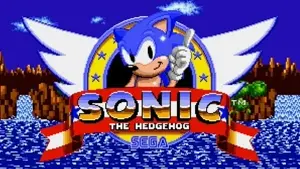
About Sonic Rush
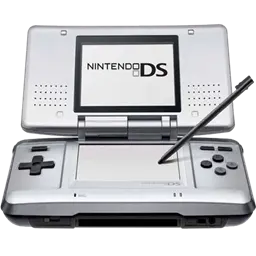
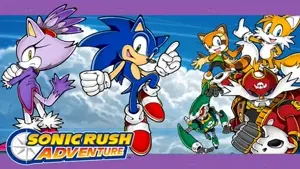
Sonic Rush is a high-speed 2D platform game developed by Dimps and Sonic Team, released in 2005 for the Nintendo DS. The game marked a major return to fast side-scrolling Sonic gameplay on handheld systems while introducing new mechanics built around speed, aerial tricks, and dual-screen action. It also introduced Blaze the Cat, a new playable character from another dimension who quickly became one of the most important characters in the modern Sonic series.
The story begins when Sonic meets Blaze after strange dimensional distortions start affecting both of their worlds. Dr. Eggman and Eggman Nega are working together to collect powerful Chaos Emeralds and Sol Emeralds, forcing Sonic and Blaze into an uneasy partnership. Unlike many earlier handheld Sonic games, Sonic Rush puts strong focus on cinematic movement and nonstop momentum, with levels designed around massive jumps, loops, rails, ramps, and vertical transitions between the Nintendo DS screens.
One of the game’s biggest additions is the boost system. By collecting rings and performing tricks, players can fill a boost gauge that allows Sonic or Blaze to burst forward at extreme speed, smashing through enemies and obstacles while maintaining momentum. The stages are built around this mechanic, often rewarding players who can react quickly and keep movement flowing smoothly from one section to the next.
Visually, the game combines classic sprite-based characters with detailed backgrounds and flashy effects that constantly emphasize movement and speed. The soundtrack also became one of the most memorable parts of the game, mixing energetic electronic music with fast gameplay. Combined with responsive controls and creative stage layouts, Sonic Rush became one of the most well-known Sonic titles on Nintendo DS.
How To Play
In Sonic Rush, players guide Sonic or Blaze through fast side-scrolling stages filled with enemies, hazards, springs, rails, moving platforms, and loops. The main goal is to reach the end of each level while collecting rings, avoiding damage, and maintaining as much momentum as possible.
Movement feels much faster than many earlier 2D Sonic games. Players can build speed naturally through slopes and ramps, but the game also introduces the boost mechanic, which allows characters to dash forward at high speed after filling the boost gauge. Boost energy is gained by collecting rings and performing aerial tricks during jumps. Timing tricks correctly increases speed and helps maintain flow during long stage sections.
Sonic and Blaze play differently despite sharing the same stages. Sonic focuses more on raw acceleration and aggressive forward movement, while Blaze has smoother aerial control and a slightly safer jump style. Because of these differences, some sections feel easier or faster depending on the chosen character.
Stages are packed with alternate pathways, hidden shortcuts, and vertical transitions between the DS screens. Some routes reward pure speed, while others require more careful platforming or enemy timing. Boss battles often use the Nintendo DS hardware in creative ways, especially during special encounters where players dodge attacks at high speed or control characters across both screens simultaneously. Special stages are also included for collecting Chaos Emeralds, requiring quick reactions and precise movement to complete successfully.