


















About Sylvester and Tweety in Cagey Capers
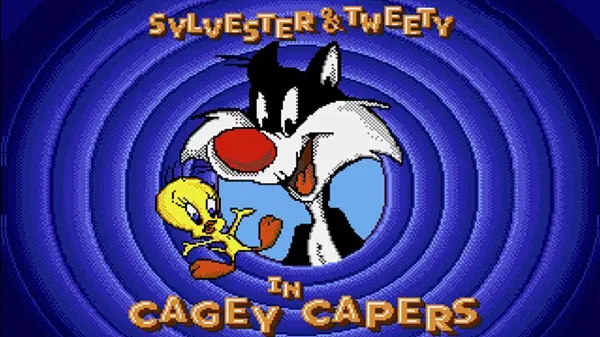
Sylvester and Tweety in Cagey Capers is a side-scrolling platform action game released for the Sega Genesis / Mega Drive in 1994. It is based on the Looney Tunes cartoon rivalry between Sylvester the Cat and Tweety Bird, turning their chase into a light puzzle-platform experience built around stealth, timing, and simple environmental interaction.
The game was developed by HeadGames and published by Time Warner Interactive. Instead of focusing on fast-paced action, it leans into a more deliberate style of play where positioning and careful movement matter more than speed. Each stage is built around indoor environments like Granny’s house, backyards, and multi-room layouts where Tweety tries to avoid being caught while Sylvester constantly searches for a way to reach him.
Unlike many platform games of the same era, this title doesn’t rely on combat. Instead, it frames each level as a small “cat-and-bird” puzzle where movement patterns, object placement, and timing all work together. Tweety often needs to use vertical space, furniture, and hidden routes to stay out of Sylvester’s reach, while Sylvester must navigate obstacles and patrol-like patterns to corner him.
On Emulator Games Zone, you can play it directly through a Sega Genesis Emulator Games setup in your browser, without needing original cartridges or hardware.
How To Play
You can play as either Sylvester or Tweety depending on the stage, and each character follows a very different approach to the same space. As Tweety, the goal is to avoid being caught by staying mobile, using elevated platforms, and slipping through tight gaps where Sylvester cannot easily follow.
Movement is careful and methodical rather than fast. Many rooms are designed like small puzzle layouts, where objects such as furniture, boxes, and environmental blockers create safe zones or temporary hiding spots. Tweety often has to time short bursts of movement to avoid being intercepted while crossing open areas.
When playing as Sylvester, the focus shifts toward pursuit. You move through connected rooms, trying to predict Tweety’s path and cut off escape routes. Some sections require memorizing room layouts and understanding where Tweety is likely to move rather than simply chasing directly.
The Genesis version emphasizes compact level design, with tightly connected indoor spaces that encourage back-and-forth navigation. Compared to more action-heavy platformers, this version feels slower and more strategic, where each small movement can change how a chase unfolds inside a room.
The gameplay is less about speed and more about reading space, positioning, and reacting to the other character’s behavior within confined environments.