





About Spider-Man vs. The Kingpin
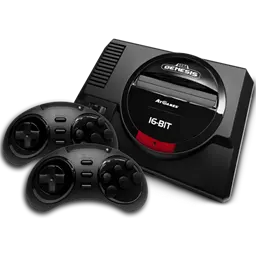
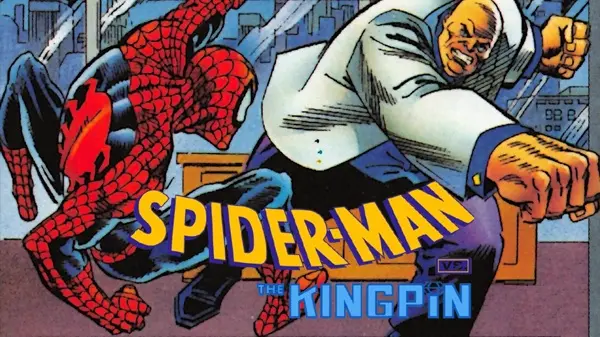
Spider-Man vs. The Kingpin is a side-scrolling action game released in 1991 for the Sega Genesis, later followed by versions on other platforms including Master System, Game Gear, and Sega CD. Developed by Technopop and published by Sega, it stands out as one of the early Spider-Man games that tried to build a more structured story around the character instead of relying purely on arcade-style stages.
The plot centers on the Kingpin framing Spider-Man for the theft of a nuclear bomb. With the city turning against him, Peter Parker has to uncover clues, track down villains, and stop the real threat before the countdown reaches zero. Along the way, he runs into several familiar enemies from Marvel’s rogues’ gallery, including Doctor Octopus, Electro, Mysterio, Sandman, Vulture, Hobgoblin, Lizard, and Venom. Each encounter feels like a separate chapter in a larger chase across New York.
The Genesis version is often remembered for its darker tone and slower, more deliberate pacing compared to later superhero platformers. Instead of rushing straight through levels, players are pushed to think about resources, movement, and when to engage or retreat. The presentation also leans heavily on comic-style storytelling, with brief cutscenes that connect each mission and give structure to the pursuit of Kingpin.
Players can experience this version directly through the Sega Genesis emulator on Emulator Games Zone, making it easy to revisit one of Spider-Man’s early console-era adventures without setup or downloads.
How To Play
Spider-Man vs. The Kingpin plays as a side-scrolling action platformer where each stage is built around exploration, combat, and boss encounters. Spider-Man moves through city streets, rooftops, warehouses, and industrial areas, fighting through enemies while searching for clues that lead toward the Kingpin.
Combat is straightforward but tightly tied to positioning. Spider-Man can punch, kick, jump over enemies, and use his web abilities to control space. Web shots can stun enemies or create openings, but they consume limited web fluid, which forces players to think before using them freely. Running out of web ammo in the middle of a fight often changes the pace completely, pushing players into close-range combat until they find more supplies.
One of the most distinctive mechanics in this version is the photography system. During certain moments, especially boss fights, Peter Parker can switch to his camera and take pictures of villains. These photos can be sold to the Daily Bugle, and the money earned is used to buy web fluid or restore resources. This creates a small but constant link between combat performance and resource management.
Each villain fight feels different in rhythm. Some enemies pressure the player with fast movement, while others rely on projectiles or environmental control. Instead of rushing through, players often need to read patterns and wait for safe openings, especially when resources are low. Combined with the non-linear structure of choosing which villains to pursue, the game gives a slightly investigative feel compared to more straightforward action platformers of its time.