














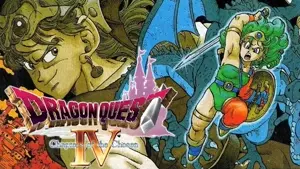


About Dragon Quest III: The Seeds of Salvation
Dragon Quest III: The Seeds of Salvation is a classic turn-based RPG developed by Enix, first released in 1988 for the Famicom/NES, and later brought to platforms such as Game Boy Color, mobile devices, and modern remakes. It is widely considered one of the most important early JRPGs, mainly because it expanded the series into a more open, player-driven adventure with deeper party customization and exploration freedom.
The story begins with a simple premise: a young hero sets out on a journey to defeat the evil archfiend Baramos and save the world from destruction. But the journey quickly grows beyond a straight path. As the world opens up, players travel across continents, visit remote towns, explore dangerous dungeons, and gradually uncover how different regions are affected by the rising darkness. The structure encourages exploration at your own pace, rather than following a tightly linear route.
One of the defining aspects of Dragon Quest III is its class system, which lets you build your party from scratch at the start of the game. Instead of fixed characters, you recruit companions and assign roles such as Warrior, Mage, Priest, or Thief. This system gives the adventure a more personal feel, since each party composition can change how battles and exploration unfold. Combined with its large overworld, hidden secrets, and strong emphasis on discovery, the game became a foundation for many later RPG systems.
You can play Dragon Quest III: The Seeds of Salvation today at Emulator Games Zone using an NES emulator, directly in your browser.
How To Play
The gameplay is built around a traditional turn-based combat system, where each party member selects an action before the round resolves. Timing and preparation matter a lot, especially in longer fights where enemies may use status effects, group attacks, or sudden damage spikes. Building a balanced team early on makes progression smoother, since each class has a specific role to play in both offense and survival.
Exploration is one of the most important parts of the experience. The world map connects towns, castles, shrines, and dungeons in a way that encourages free movement and experimentation. Towns act as hubs where you buy equipment, rest at inns, and gather clues about your next destination, while dungeons often require careful navigation, with hidden paths and stronger monsters guarding valuable rewards.
Party management plays a big role in long-term progression. Each character gains experience independently, and since the party is fully customizable, players often experiment with different combinations of classes. Warriors provide durability, Mages handle offensive spells, Priests support the team with healing and buffs, and Thieves help uncover hidden items and shortcuts that would otherwise be missed.
Another important element is the sense of risk during exploration. Resources like healing items and MP are limited, so dungeon runs often require planning ahead before committing to deeper areas. Returning to town at the right time becomes part of the strategy, especially when preparing for boss encounters that demand sustained performance over multiple turns.
Overall, Dragon Quest III rewards curiosity and planning. Whether you are experimenting with party setups, uncovering hidden locations, or slowly expanding your understanding of the world, the game constantly encourages you to think ahead and adapt your strategy as the journey unfolds.